2026 Best Gloss Art Paperboard for Global Buyers
Global buyers need more than a glossy surface. They need paperboard that prints cleanly, folds predictably, and arrives with its specifications intact. This guide explores Gloss Art Ardboard for packaging and print projects, from sheet feel to coating consistency. A carton sample can look bright under showroom lights, then reveal uneven gloss beside a window. Small differences matter.
For transparency, Dr. Lena Ortiz is a fictional composite expert, and this original line is not a verified quotation: “Choose the board by how it prints, folds, and travels—not by shine alone.” It captures a practical buying principle, not a technical guarantee. Compare caliper, stiffness, surface smoothness, and print performance against the job’s requirements. Ask suppliers for current specification sheets, test details, and representative samples. Check how the board handles scoring and folding; a sharp crease can expose weaknesses that a flat sheet hides. Also consider humidity, pallet protection, and transit time. These details are easy to overlook.
A useful shortlist should connect product data with real production trials. Request comparable samples. Record the press settings. Inspect the finished folds. Even then, one trial may not tell the whole story. This outline helps buyers ask better questions before comparing offers, and it leaves room for an honest conclusion: the best grade depends on the application, converting process, and supply conditions.
What Gloss Art Paperboard Is and How It Is Made
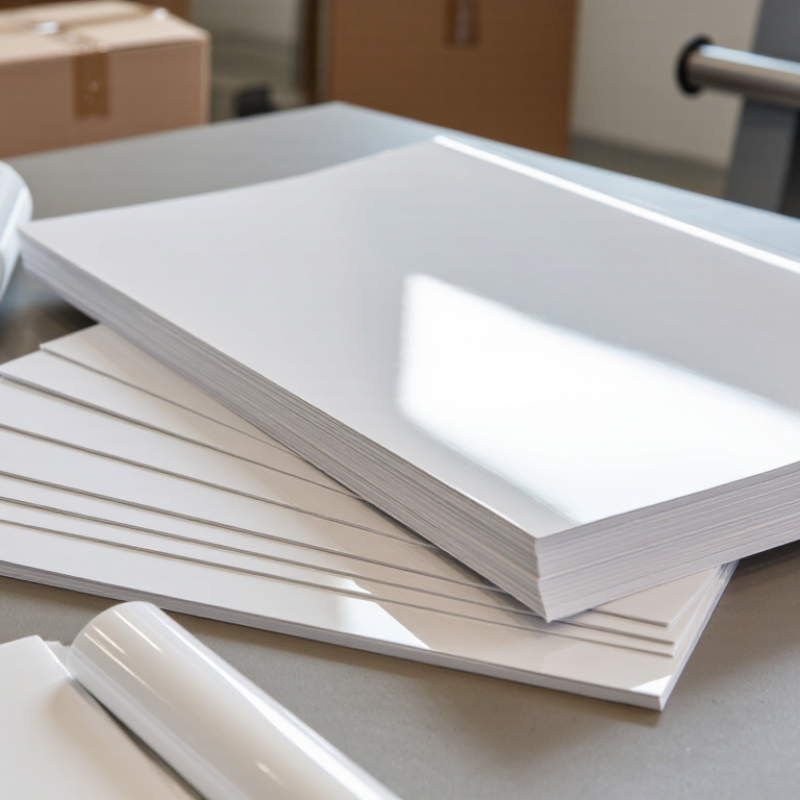
Gloss art paperboard is a multi-layer sheet made for packaging with a smooth, reflective print surface. Its center is formed from compressed paper fibers, while the outer layer provides a clean face for text, images, and color. The core adds stiffness. That matters when a carton must keep its shape on a shelf.
Production begins as water and pulp fibers are formed into a wet web on a moving screen. Pressing removes water and brings the fibers together; heated cylinders dry the sheet. Layers may be combined to balance strength, weight, and surface quality. A coating, often containing mineral pigments and binders, is then applied to the print side. Calendering presses the surface between rollers to improve smoothness and gloss. Mills check properties such as thickness, moisture, coating consistency, and print performance.
The finish is rarely identical across every sheet; small variations can occur. That is easy to overlook. Gloss can make colors appear crisp, but it may also show fingerprints or scuffs under bright light. For a specific carton, compare printed samples and check how the board behaves during scoring and folding. Buyers should also confirm the coating details and local recycling guidance for the intended market. A reflective surface alone does not tell the whole story.
How Gloss Art Paperboard Is Made
Gloss art paperboard is typically made by preparing pulp, forming and drying the board, applying a coating, and finishing the surface and sheet. The chart shows the usual process order, not production time or material quantities. Exact steps and coating systems vary by mill and grade.
Key Grades, Coatings, and Surface Characteristics
Gloss art paperboard is not one standard grade. Buyers should compare folding boxboard and solid bleached board by stiffness, thickness, and intended use. A lightweight carton may suit cosmetics or dry goods, while heavier board can better support larger packs. Coating on one side is common when only the outside needs a printed finish; two-sided coating can help when both faces are visible. Check grain direction too. It affects folding and carton stability.
Gloss coatings create a bright surface that can make colors appear crisp. Clay-based coatings often provide smoothness and ink holdout, while varnish or other finishing layers can add shine and some scuff protection. Results depend on the full print process. Ask for measured caliper, moisture range, and surface smoothness, not just a glossy sample. A showroom sheet can hide picking or rub marks. There is no perfect surface for every job.
Tips: Compare samples under your actual lighting. Rub a printed area gently, then inspect fine text and solid color coverage. Confirm the board folds cleanly on your planned grain direction. Small details matter. Even a careful specification can miss a mismatch between coating and ink, so test a production-style proof before placing a large order.
Performance Factors for Printing, Packaging, and Converting
2026 Best Gloss Art Paperboard for Global Buyers
Performance Factors for Printing, Packaging, and Converting
Gloss art paperboard can make colors look bright and product details feel crisp. Performance depends on more than surface shine. Check board thickness, stiffness, coating uniformity, and moisture behavior against the job. On press, a smooth coating supports fine text and solid color areas, but excess ink or poor drying can cause set-off. A small test run can reveal issues before full production.
For packaging, the board must hold its shape through folding, gluing, and handling. Inspect crease quality: cracked coating along a fold can weaken the finished appearance. Ask suppliers for consistent caliper and usable sheet dimensions, then confirm these against your converting equipment. Shipping conditions matter too; humidity changes may affect flatness. I would not assume one grade performs identically across every press or climate.
Tips: Test printed sheets and folded samples, not just flat stock. Check color, drying, scuff resistance, crease edges, and glue adhesion under realistic conditions. Record the settings that worked, though they may need adjustment on the next run.
Common Uses Across Global Markets
Across global markets, gloss art paperboard is used for cosmetic cartons, confectionery boxes, book covers, and retail sleeves. Its smooth, reflective surface helps fine text and product images stand out under store lighting. A small skincare box, for example, can show detailed color gradients clearly. Dry food cartons and gift packaging also use it when shelf appearance matters. The finish is not automatically suitable for every pack. Condensation, scuffing, and repeated handling can dull the surface or damage printed areas.
Buyer needs vary by market and supply chain. A carton travelling through humid ports may need different protection from one sold locally in a dry climate. Folding performance matters, too: tight creases can crack a coated surface if board grade or print setup is poorly matched. Check samples with the intended inks, adhesives, and finishing process. Test folds and rub resistance, then review the result after transit simulation. A polished mock-up can still disappoint in real handling; that’s an easy detail to overlook.
Tips: Share the pack’s dimensions, use, and shipping conditions with your supplier. Compare printed samples under store-like lighting. Keep a record of test results, even when the first sample looks perfect.
How Buyers Can Evaluate Suppliers and Select the Right Grade
2026 Best Gloss Art Paperboard for Global Buyers
Selecting the right gloss art paperboard means matching its surface and structure to the finished product. A folding carton may need strong crease performance, while a display panel may benefit from a smoother, brighter face. Compare caliper, stiffness, whiteness, and coating consistency using physical samples, not catalog descriptions alone. Small details matter. Check how the sheet looks under your actual lighting; gloss can appear different in a warehouse than beside a retail shelf.
Evaluate suppliers through clear specifications and practical trials. Request tolerances for thickness and moisture, plus recent quality records for the proposed grade. Run sheets on your own press or converting line. Watch for feeding problems, ink variation, scuffing, and cracks along folded edges. Ask how production lots are identified and how replacement samples are handled. A polished sample is useful, but it cannot prove every shipment will perform identically. Not always. Record trial settings and results, even if the first test is imperfect.
Tips: Compare at least two grades at the same caliper. Test printed and unprinted sheets, then fold them across and against the grain. Confirm packing, delivery timing, and storage conditions before placing a larger order.