
Blog

2026 Top Vacuum Mug Types for Global Buyers?

Global buyers are entering 2026 with higher expectations for drinkware performance, safety, and sustainability. The Vacuum Mug is no longer only a commuter accessory. It now serves offices, vehicles, travel, outdoor work, hospitality, and corporate gifting. Grand View Research reported continued growth in the global reusable water bottle market, supported by waste-reduction goals and changing consumer habits. Its findings suggest that durable, reusable drinkware remains commercially relevant across major regions.

Market forecasts, however, should be read carefully. Mordor Intelligence identifies product durability, insulation performance, and portability as important competitive factors in the reusable bottle sector. These factors also shape Vacuum Mug purchasing decisions. Buyers often compare stainless steel grades, vacuum-layer construction, lid sealing, mouth width, handle design, and cleaning convenience. Small details matter. A mug that fits a car holder can outperform a larger model with better insulation.

This guide examines the top Vacuum Mug types expected to attract global buyers in 2026. It compares stainless steel travel mugs, ceramic-lined models, leak-resistant commuter mugs, smart temperature-control designs, and lightweight outdoor options. Testing claims should be checked against measurable evidence, not attractive packaging. For example, “keeps drinks hot” needs a defined temperature, duration, and testing method. Food-contact compliance also requires regional verification, including applicable European Union, United States, and other national requirements. No ranking is universal. A premium mug may suit an office buyer but fail during rough transport. Industry reports provide direction, yet real purchasing decisions still depend on user experience, supplier reliability, and transparent specifications.
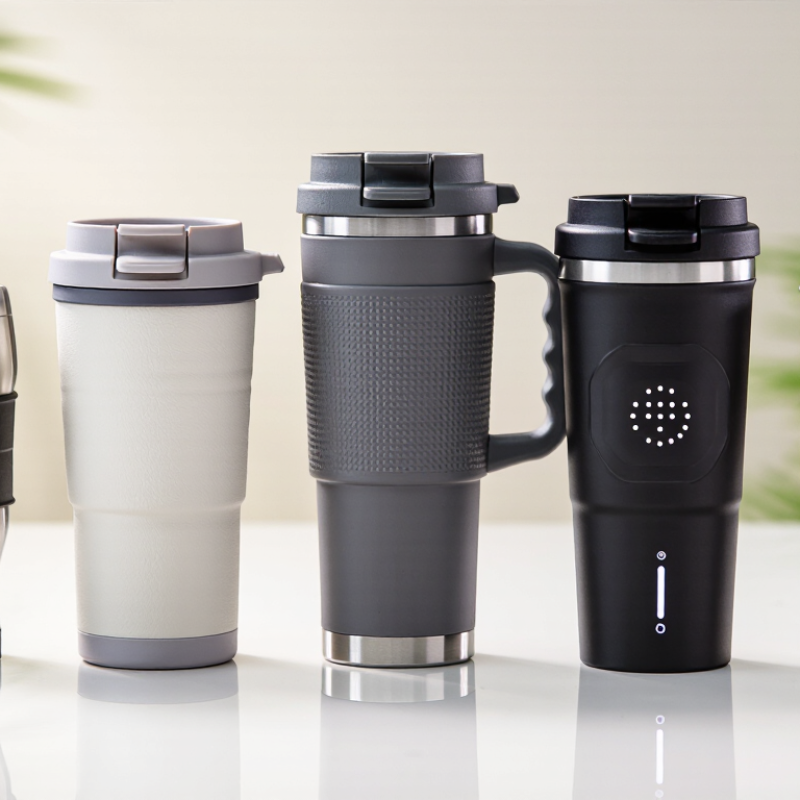
2026 Top Vacuum Mug Types for Global Buyers?

What Is a Vacuum Mug and How Does It Work?

2026 Top Vacuum Mug Types for Global Buyers

What Is a Vacuum Mug and How Does It Work?

A vacuum mug uses two walls, usually made from food-grade stainless steel. Air is removed from the space between them. This empty layer slows heat transfer through conduction and convection. Your coffee stays warmer, while iced water melts more slowly.

The lid matters more than many buyers expect. A tight seal reduces heat loss through the opening and helps prevent splashes during travel. Some mugs use sliding covers, flip lids, or straw openings. Each design suits a different routine. A handled mug feels stable at a desk, while a slim travel mug fits many vehicle holders. Wide-mouth models are easier to clean, but they may spill more easily.

The outside should remain comfortable to hold. Usually, it does. However, no vacuum mug performs perfectly in every condition. A cold lid can still collect moisture in humid weather. A simple test helps: fill the mug with hot water, close it, and check the temperature after several hours. Buyers should examine the lid seal, thread quality, coating durability, and cleaning instructions. For global sourcing, request food-contact material records and reliable temperature-test data. One overlooked detail is replacement-part availability. A damaged seal can reduce performance long before the metal body fails. The impressive claim may be incomplete.

Which Vacuum Mug Types Will Lead Global Markets in 2026?

In 2026, stainless-steel double-wall vacuum mugs are likely to lead global markets. They offer strong heat retention, impact resistance, and broad recycling compatibility. Grand View Research projects the reusable water bottle market to grow at about 4.5% annually through 2030. That growth supports durable, reusable drinkware.

The strongest demand should come from leakproof travel mugs and slim commuter models. Office workers need cups that fit vehicle holders and narrow desk spaces. Buyers in colder regions may prefer 400–500 ml mugs with thicker insulation. In warmer markets, larger 600–900 ml vacuum tumblers may perform better.

Practical testing matters. A mug can claim 12 hours of heat retention, yet its lid may leak after repeated opening.

Vacuum mugs with ceramic interiors may gain attention among users sensitive to metallic taste. However, they usually cost more and can be less tolerant of drops.

Market reports from Fortune Business Insights identify expanding demand for insulated drinkware, but their category definitions vary. This makes direct forecasts imperfect.

Still, procurement teams can compare:

  • wall structure
  • seal durability
  • food-contact materials
  • replacement-part access

These details often matter more than decorative finishes.

Personalization will remain useful for corporate purchasing, but excessive surface coatings may reduce long-term recyclability. I would not treat every premium feature as essential.

For 2026 buyers, the leading type may be the simplest reliable mug: stainless steel, vacuum insulated, leak resistant, and easy to clean.

How Do Materials and Insulation Designs Affect Performance?

2026 Top Vacuum Mug Types for Global Buyers?

Material choice shapes heat retention, taste, weight, and long-term reliability. Food-grade 18/8 stainless steel remains the practical standard because it resists corrosion and tolerates daily impacts. Titanium is lighter, but its higher cost may not suit office or hospitality buyers. Ceramic-lined interiors reduce metallic taste, although chips can expose weaker areas. Plastic lids still deserve attention. They often lose heat faster than the mug wall.

Insulation design matters more than appearance. Double-wall vacuum construction limits conduction and convection, while a copper-coated inner wall can reduce radiant heat transfer. The U.S. Department of Energy explains that low-emissivity surfaces reduce radiant heat, a principle used in insulated containers. However, the lid, mouth opening, and silicone seal remain thermal weak points. ASTM testing guidance for thermal containers also supports controlled testing, not casual “keeps hot” claims. Grand View Research’s reusable water bottle market analysis reported continued global growth through 2024, but market growth does not prove every vacuum mug performs equally. Real testing is still necessary.

Tips: Check hot-water retention after six and twelve hours. Inspect the seal for twisting or flattening. Choose a wide mouth for cleaning, but expect slightly faster heat loss. A narrow mouth may retain heat better, yet it can trap residue. I would not rank titanium above steel for every buyer. The best choice depends on transport, cleaning habits, climate, and replacement access. Even excellent insulation fails when the lid is poorly fitted.

2026 Top Vacuum Mug Types for Global Buyers? – How Do Materials and Insulation Designs Affect Performance?

Vacuum Mug Type Typical Construction and Materials Approximate Empty Weight
(350–500 ml)
Typical Thermal Performance
with Closed Lid
Durability and Impact Resistance Main Advantages Typical Limitations
Double-Wall Stainless Steel Vacuum Mug Best Overall Food-contact stainless steel inner wall, stainless steel outer wall, and a sealed vacuum gap. Common grades include 304 stainless steel; 316 stainless steel offers higher resistance to chloride-related corrosion. 250–400 g Hot beverages commonly remain above approximately 60°C for 4–8 hours; cold beverages may remain below approximately 10°C for 8–16 hours, depending on wall thickness, lid design, fill level, and ambient temperature. High resistance to dents, cracking, and corrosion. The vacuum can be damaged by severe deformation. Strong balance of heat retention, durability, safety, cleanability, and global availability. Heavier than plastic or single-wall drinkware; metal surfaces can become hot around the lid or opening.
Copper-Enhanced Stainless Steel Vacuum Mug High Thermal Efficiency Stainless steel vessel with a thin copper coating or copper layer within the wall structure, combined with a vacuum gap. Copper improves radiative heat control when properly integrated. 260–420 g Often provides slightly improved heat retention compared with a basic double-wall design, but the actual result depends more on vacuum quality, lid sealing, and wall geometry than on copper alone. High mechanical durability when copper is enclosed between protective layers. Exposed copper may tarnish or be vulnerable to chemical attack. Efficient thermal design without a major increase in product size; suitable for premium performance specifications. Higher manufacturing cost; copper does not compensate for a poorly sealed lid or weak vacuum.
Ceramic-Lined Stainless Steel Vacuum Mug Taste-Focused Stainless steel vacuum body with a food-safe ceramic or enamel-like inner coating designed to reduce direct beverage contact with metal. 300–450 g Generally similar to the underlying stainless steel vacuum structure. The inner coating has little effect on insulation compared with the vacuum gap and lid. Steel body is impact-resistant, but the ceramic lining may chip, craze, or scratch if dropped or cleaned with abrasive tools. Neutral taste profile for coffee, tea, and acidic beverages; easier to reduce residual flavor transfer. Coating damage can expose the metal substrate; users must follow cleaning and temperature-shock guidance.
Titanium Vacuum Mug Ultralight Thin-wall titanium inner and outer walls with a vacuum gap. Titanium is valued for its low density, strength, and corrosion resistance. 150–280 g Usually comparable to other well-made double-wall vacuum mugs of similar geometry. Thin walls may reduce overall thermal mass. Excellent corrosion resistance and high strength-to-weight ratio; thin titanium walls can still dent under concentrated impact. Very light, durable, and suitable for travel, hiking, aviation, and outdoor applications. Higher material and forming cost; titanium has lower thermal conductivity than copper but is not, by itself, an insulation system.
Glass Vacuum Mug Double-wall borosilicate glass body with a sealed vacuum space, often combined with a silicone or plastic protective sleeve. 250–450 g Can provide good hot and cold retention when the vacuum seal and lid are well designed. Performance varies considerably by wall thickness and opening size. Borosilicate glass tolerates temperature changes better than ordinary glass, but the mug remains more vulnerable to impact and breakage than metal. Transparent appearance, low odor retention, and a neutral taste profile. Breakage risk, lower suitability for rough transport, and potentially higher packaging requirements for international shipping.
Insulated Plastic Travel Mug Double-wall polypropylene, Tritan, or similar plastic construction, usually with an air gap rather than a true vacuum. Some models include foam or expanded polymer insulation. 120–250 g Commonly keeps beverages warm for approximately 1–3 hours and cold for approximately 2–6 hours, depending on the lid, wall thickness, and ambient conditions. Very good impact resistance and low breakage risk; plastic may scratch, discolor, or absorb odors over time. Lightweight, economical, and convenient for commuting, schools, events, and large-volume promotional programs. Lower thermal retention than a true vacuum mug; some plastics may deform with high heat if not heat-rated.
Vacuum Mug with Ceramic or Silicone Exterior Comfort-Oriented Stainless steel vacuum core with a ceramic coating, silicone sleeve, or soft-touch exterior for improved grip and reduced contact with cold metal. 280–480 g Thermal retention is mainly determined by the stainless steel vacuum core. The exterior layer primarily improves handling comfort and surface protection. Silicone improves grip and protects against minor impacts; ceramic exterior finishes can chip or stain if poorly handled. Comfortable handling, improved condensation control, and strong visual appeal for retail and hospitality use. Additional exterior materials can increase weight, cleaning complexity, and end-of-life separation requirements.
Leak-Resistant Commuter Vacuum Mug Best for Mobility Usually a double-wall stainless steel vacuum body with a threaded, press-fit, or locking lid using silicone gasket components. 250–420 g Commonly offers 4–8 hours of practical hot retention and 8–16 hours of cold retention when the lid is fully closed and the mug is filled appropriately. Strong body durability; lid hinges, seals, valves, and threads are the components most likely to require maintenance or replacement. Designed for bags, vehicles, offices, and public transport; a secure lid reduces spill risk during movement. More parts require regular cleaning; leak resistance depends on correct gasket placement and closure force.

Note: Performance figures are indicative industry ranges rather than universal test results. Actual retention depends on beverage starting temperature, fill volume, lid opening frequency, vacuum quality, wall thickness, gasket condition, and ambient temperature. For international procurement, buyers should request independent testing for thermal retention, leakage, food-contact compliance, and durability.

Which Features Matter to Buyers in Different Regions?

A perfect global vacuum mug does not exist. Regional habits shape the features buyers actually value. The International Coffee Organization recorded global coffee consumption at 177.9 million 60-kilogram bags in 2023/24. That volume supports strong demand for mugs that preserve heat during commuting, office work, and travel.

North American buyers often prioritize leak resistance, generous capacity, and one-handed opening. The National Coffee Association reported that 67% of American adults drank coffee daily in spring 2024. A 16–20 ounce mug, secure locking lid, and cup-holder-friendly base suit this routine.

European buyers may examine material transparency, repairability, and packaging waste more closely. The European Environment Agency continues to highlight resource efficiency and circular product design, making replaceable seals and recyclable steel practical selling points.

Asia-Pacific markets often reward lighter bodies, slimmer shapes, and compact storage. In hot regions, buyers may prefer strong insulation, sweat-free exteriors, and wider openings for ice.

Middle Eastern customers can value extended heat retention for tea and coffee during long outdoor journeys. Small details matter. Silicone grips help with condensation. A lid that traps odors can still disappoint.

This is where product testing needs more honesty: laboratory heat-retention results rarely reflect dusty roads, repeated washing, or hurried users. Manufacturers should compare regional hand sizes, cup holders, cleaning habits, and climate conditions before choosing one “global” design.

How Can Global Buyers Compare Quality, Safety, and Cost?

2026 Top Vacuum Mug Types for Global Buyers?

How Can Global Buyers Compare Quality, Safety, and Cost?

Vacuum mugs now come in stainless steel, ceramic-lined, glass, and recycled-material designs. Stainless steel remains practical for daily shipping and outdoor use. Ceramic linings reduce metallic taste but may chip after rough handling. Glass gives a clean flavor, yet it needs stronger protective packaging. Buyers should match the mug type with climate, transport conditions, and user habits.

Test the details, not only the appearance. Check heat retention after six and twelve hours. Inspect the lid seal, thread accuracy, handle strength, and coating adhesion. A mug that survives a one-meter drop test offers better value than a polished sample. Food-contact safety reports should cover the inner material, paint, gasket, and straw. Request current laboratory documents and batch traceability. Old reports can create false confidence.

Safety starts with the lid. A loose valve can spill hot liquid onto hands or electronics. Ask for leak tests at different temperatures and pressure conditions. Cost comparison should include tooling, packaging, freight, inspection, duties, and replacement rates. The lowest factory price may become expensive after damaged cartons and customer complaints. I once underestimated gasket quality because the first samples looked perfect. That was a useful mistake. Suppliers should provide several production samples, not one carefully selected piece. Buyers also need clear care instructions, because dishwasher heat and harsh cleaners can shorten product life. Short warranties deserve questions.

How to read this comparison: The scores are indicative 0–100 buyer benchmarks based on commonly used construction materials, insulation performance, food-contact safety, durability, and typical sourcing cost. Higher quality and safety scores are better, while a higher cost-efficiency score indicates more performance per dollar. Stainless steel grades commonly used for drinkware include 304 and 316, with 316 generally offering better corrosion resistance but higher cost.
Recycle

Request a Quote

Fill out the form below and one of our specialists will contact you to discuss your questions and needs.

Start your sustainable waste service today