Blog

China Top 10 Grease Interceptor Manufacturers

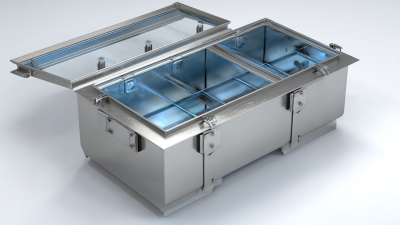
China’s market includes manufacturers serving restaurants, hotels, food processors, and commercial kitchens. Their products range from compact under-sink units to larger outdoor systems. Greaseinterceptors help separate fats, oils, and grease from wastewater before discharge. Design details matter. Tank capacity, material, cleaning access, and installation space can all affect daily operation. A polished product photo cannot show how easily a lid opens after months of use.

This guide introduces ten China-based manufacturers and offers a practical starting point for supplier research. It considers product range, manufacturing experience, customization options, documentation, and service support where information is available. These points can help buyers prepare better questions, but they do not prove that one supplier is best for every project. Needs differ. A small café may value a compact footprint, while a food plant may need higher capacity and a clear maintenance plan. Buyers should confirm specifications, test reports, production details, and delivery terms directly with each company. Public information can be incomplete, and company claims deserve careful checking. That is worth admitting. The list is an overview, not a formal certification or a guarantee of performance. Use it to compare options, request drawings, and discuss cleaning access before placing an order. A few careful questions now may prevent an awkward fit later.
China Top 10 Grease Interceptor Manufacturers

Grease Interceptors: Purpose, Types, and Operating Principles

Grease interceptors reduce fats, oils, and grease entering drainage pipes. They slow wastewater so heavier food particles can settle and floating grease can separate. In a gravity unit, baffles guide the flow through a tank before water leaves through the outlet. Hydromechanical models use flow control and internal components to separate grease in a smaller space. Neither type removes every contaminant, and performance depends on correct sizing and regular care.

A kitchen’s dishwashing volume, menu, and peak service hours all affect interceptor selection. A busy fryer station may send warmer, grease-heavy water into the drain than a small café does. As wastewater cools, grease can collect on tank surfaces and form a dense layer. Solids may build up below it. A unit that looks adequate on paper can still struggle during a lunch rush; that is an easy detail to underestimate.

Tips: Check accumulated grease and solids routinely, rather than relying only on a fixed schedule. Keep a simple record of inspections and cleaning. Scrape food scraps into waste containers before washing dishes, and avoid sending concentrated cooking oil into drains. After servicing, confirm that internal baffles are in place and the outlet is clear. Small checks matter.

China’s Grease Interceptor Manufacturing Industry

China’s grease interceptor manufacturing industry serves restaurants, hotels, food processors, and commercial kitchens. Its factories work with stainless steel, molded polymers, and other corrosion-resistant materials. Production may include sheet cutting, welding, tank forming, basket assembly, and leak checks. Capabilities differ: one supplier may focus on compact under-sink units, while another builds larger systems for outdoor installation. Dense supply networks can support custom dimensions and steady production. Still, a polished catalog does not prove consistent workmanship.

Tips: Ask for drawings showing inlet and outlet positions, usable capacity, and cleanout access. Request material specifications and inspection records for the actual model. Check how the unit can be opened and cleaned; a difficult lid can turn routine maintenance into a chore. Confirm packaging protects pipes and fittings during transport.

For buyers comparing manufacturers, factory visits or live production reviews can reveal details that product photos miss. Look closely at weld seams, lid fit, basket removal, and the finish around pipe connections. A sample unit can help verify dimensions before a larger order. Ask how flow performance is checked, and clarify what the supplier considers normal operating conditions. I would not treat a low price as proof of poor quality, either. That assumption is too easy; evidence matters more.

Criteria for Comparing China’s Top 10 Manufacturers

China Top 10 Grease Interceptor Manufacturers

Criteria for Comparing China’s Top 10 Manufacturers

A useful comparison starts with the interceptor’s intended site and operating conditions. Check the stated flow rate, tank capacity, inlet and outlet dimensions, and access for routine cleaning. A unit that fits a catalogue specification may still be awkward beneath a crowded sink or inside a narrow service room. Details matter.

Examine construction evidence, not only product photographs. Ask for material specifications, weld inspection records, leak-test procedures, and production quality checks. For stainless steel units, confirm the grade and sheet thickness against the project requirements. Inspect drawings for baffle placement, removable covers, and smooth internal surfaces where grease could collect. Ask for evidence.

Manufacturing capability also includes consistent documentation and realistic lead times. Compare sample drawings, inspection reports, packaging methods, and the process for handling custom dimensions. Confirm how replacement parts and technical questions are managed after delivery. Factory visits or independent inspections can help verify claims when project value justifies the effort. No single metric tells the whole story; even a detailed checklist can miss how a unit performs in daily use.

China’s Grease Interceptor Manufacturers: Comparison Criteria

Suggested weighting for evaluating manufacturers. These percentages are a comparison framework, not measured market data or ratings of specific companies.

When comparing suppliers, verify performance claims against published flow-rate and grease-retention data, applicable certifications, material specifications, installation requirements, warranty terms, and documented after-sales support.

Profiles of Ten Leading Chinese Manufacturers

Profiles of ten Chinese grease-interceptor manufacturers are most useful when they compare build quality, product range, and engineering support—not just factory size. The group includes makers of stainless-steel under-sink units, larger buried systems, modular tanks, and automatic grease-removal equipment. Look for measurable details: steel grade, tank capacity, access-opening dimensions, flow rating, and cleaning method. These specifications help buyers judge whether a unit fits a restaurant kitchen or a central food-service facility.

The UN World Water Development Report 2017 estimates that about 80% of global wastewater enters the environment without adequate treatment. That figure is not specific to grease, but it underlines the value of managing kitchen wastewater at source. A credible manufacturer profile should explain testing methods and maintenance needs. Ask how often staff must remove accumulated grease, and whether internal baffles can be inspected without special tools. Catalogs can look polished. Installation details are sometimes thin.

Tips

Request a drawing showing inlet, outlet, and service access. Check capacity against peak flow, not average use. One weakness in many comparisons is relying on advertised capacity alone; actual performance also depends on cleaning routines and correct installation.

How to Select a Grease Interceptor Manufacturer in China

Choosing among China’s grease interceptor manufacturers starts with the project, not a catalogue price. Record peak wastewater flow, number of sinks, available floor area, and whether installation is indoors or buried. These details shape capacity, connection size, access, and cleaning frequency. Details matter. Ask the supplier to explain its sizing method and assumptions in writing. A low quote can hide a unit that needs frequent emptying.

Check how the manufacturer controls production. Request drawings, material specifications, inspection records, and a finished-unit test report. For stainless steel, confirm grade and thickness; for polymer units, ask about wall strength and temperature limits. Ask for proof. Verify that the proposed model has been used in applications with similar flow and kitchen conditions. References are useful, but photos alone do not confirm performance.

Compare service access, removable baskets, baffle design, and replacement-part availability. Ask who handles installation questions and how quickly technical support responds. Confirm lead time, packaging, spare parts, and warranty terms before paying a deposit. If documents are vague, request a sample drawing or test record; this can reveal more than a polished brochure. I would not choose on price alone. Supplier explanations can be incomplete, so keep a written checklist and verify critical dimensions before production.

Recycle

Request a Quote

Fill out the form below and one of our specialists will contact you to discuss your questions and needs.

Start your sustainable waste service today