
What Is Garbage Removal and How Does It Work?
Garbage Removal is more than carrying unwanted items to a truck. It is a planned service that collects, sorts, transports, and processes discarded materials safely. Understanding this process helps homeowners, businesses, and property managers choose suitable support and avoid unnecessary costs.
William Rathje, a respected waste researcher and founder of the Garbage Project, said, “Garbage is a very good place to look for the truth.” His observation remains relevant because discarded materials reveal how people live, consume, and waste resources. A professional Garbage Removal team examines the load before moving it. Cardboard, furniture, appliances, green waste, and construction debris may require different handling methods. Some materials can be reused or recycled. Others need controlled disposal through approved facilities.
The work often begins with an estimate, either online or on site. Workers then confirm access, identify hazards, protect walls and floors, and load the items carefully. A responsible company should explain its pricing, service limits, and disposal practices clearly. Credentials, insurance, staff training, and local operating requirements also matter.
The process is not always perfect. Sorting decisions can vary between facilities, and recycling systems differ by region. That uncertainty deserves honest discussion. Customers should ask where their materials go, rather than trusting vague promises. This guide explores how Garbage Removal works, what affects its price, and how to prepare for a cleaner, safer collection. Small details matter. A narrow staircase, wet mattress, or overloaded garage can change the entire job.
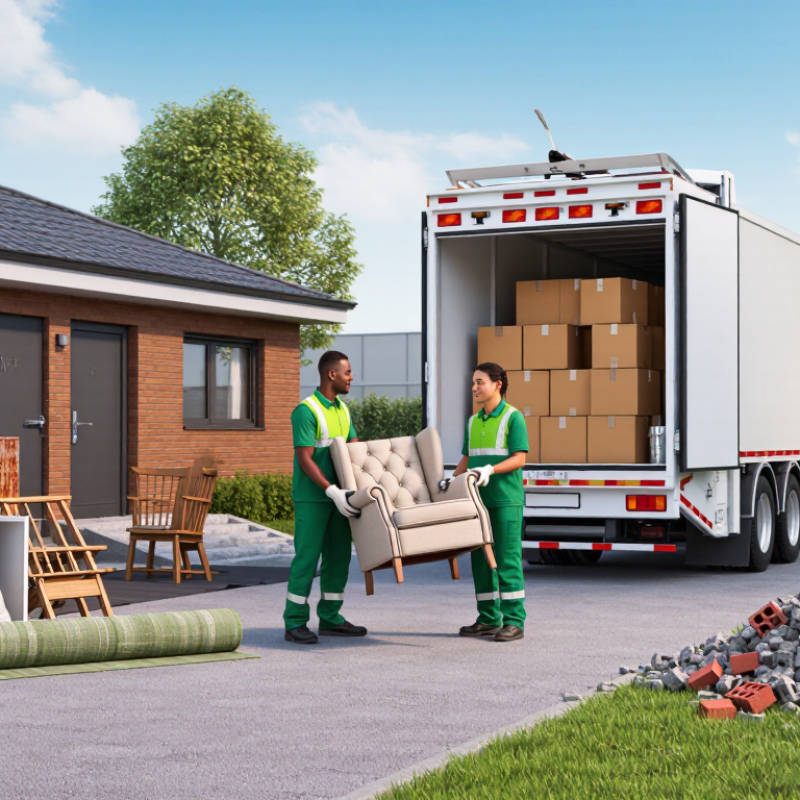
Table of Contents
[Hide]
What Garbage Removal Means: Waste Types and the 2.24-Billion-Tonne Scale
What Is Garbage Removal and How Does It Work?
Garbage removal is more than taking a bin to the curb. It is a managed chain of collection, transport, sorting, treatment, and disposal. Collection crews move household and commercial waste to transfer stations. There, loads may be weighed, compacted, and redirected to recovery or treatment facilities. Recyclables, food scraps, yard trimmings, and residual waste need different handling. Household hazardous waste also requires controlled collection. The boundary is not always clean. Some materials are easily misclassified.
The United Nations Environment Programme’s Global Waste Management Outlook 2024 estimates that the world generates 2.24 billion tonnes of municipal solid waste each year. This amount could reach 3.88 billion tonnes by 2050 without stronger prevention and recovery systems. The World Bank’s What a Waste 2.0 reported about 2.01 billion tonnes in 2016. These figures show the scale behind a simple household bin. Organic waste forms a significant share in many regions, while paper, plastics, metals, and glass may enter recycling streams. However, contamination can reduce their value.
Tips: Keep food scraps separate from dry recyclables. Check local collection rules before placing batteries or chemicals outside. Empty containers, but do not assume every plastic item is recyclable. Small mistakes matter. Better sorting helps workers, yet no system is perfect. Waste prevention still deserves more attention than disposal efficiency.
What Is Garbage Removal and How Does It Work?
What Garbage Removal Means: Waste Types and the 2.24-Billion-Tonne Scale
| Waste Type or Dimension | Global Share or Scale | Typical Examples | Common Removal and Treatment Method | Main Environmental Consideration |
|---|---|---|---|---|
| Food and green waste | 44% of municipal solid waste | Food scraps, garden trimmings, leaves, and other biodegradable material | Separate collection, composting, anaerobic digestion, or controlled disposal | Decomposition in landfills can produce methane; biological treatment can recover nutrients and energy |
| Paper and cardboard | 17% | Packaging, newspapers, office paper, cartons, and corrugated boxes | Source separation, sorting, pulping, and recycling; contaminated material may be treated as residual waste | Recycling reduces demand for virgin fiber and can conserve energy and water |
| Plastic waste | 12% | Bottles, films, containers, packaging, and durable plastic goods | Mechanical recycling for suitable polymers, chemical recovery in limited applications, energy recovery, or disposal | Persistent litter, microplastic formation, and greenhouse-gas emissions across the material life cycle |
| Glass | 5% | Bottles, jars, and broken glass containers | Separate collection, color sorting, crushing into cullet, and remelting | Glass is highly recyclable, but contamination and transport weight affect collection efficiency |
| Metal | 4% | Steel cans, aluminum containers, foil, and small metal items | Magnetic and eddy-current separation followed by smelting and material recovery | Recycling metals generally uses less energy than extracting and processing primary ores |
| Rubber, leather, and wood | 4% combined | Tires, shoes, treated wood, furniture, and small timber products | Reuse, repair, specialized recycling, material recovery, controlled combustion, or disposal | Some treated materials may contain chemicals that require controlled handling |
| Other municipal waste | 14% | Textiles, ceramics, ash, composite products, and miscellaneous materials | Reuse where possible, sorting, specialized treatment, energy recovery, or engineered landfill disposal | Mixed materials are difficult to recycle and often increase residual waste volumes |
| Global municipal solid waste generation | About 2.01 billion tonnes per year in 2016 | Waste generated by households, institutions, and similar municipal sources | Collection, transfer, sorting, recycling, biological treatment, energy recovery, and final disposal | Collection coverage and safe disposal vary substantially between regions and income groups |
| Projected global generation | About 3.40 billion tonnes per year by 2050 | Projected municipal solid waste under a business-as-usual trend | Requires expanded collection systems, waste prevention, reuse, recycling, composting, and safer disposal | Population growth, urbanization, and consumption patterns are major drivers of future volumes |
Data note: The waste-composition percentages and global generation figures are based on the World Bank report What a Waste 2.0: A Global Snapshot of Solid Waste Management to 2050. The often-cited 2.24-billion-tonne figure depends on the year, geographic coverage, and waste categories included; the World Bank’s comparable global municipal solid-waste baseline is approximately 2.01 billion tonnes per year in 2016.
Related Posts
-
Leading Garbage Pickup Solutions from a Top Exporting Manufacturer Worldwide
-
Ultimate Checklist for Finding the Best Garbage Removal Service in Your Area
-

Advantages of Efficient Waste Pickup Solutions for Sustainable Business Practices
-

Innovative Solutions for Efficient County Waste Management
-
5 Best Trash Pickup Strategies for a Cleaner Community
-
How to Choose County Waste Management Services Effectively?