
Blog
2026 How to Choose Price Gun Label Rolls?
Choosing price gun label rolls may seem like a small purchasing decision. At the checkout counter, it affects more than appearance. A roll that feeds smoothly can help staff mark products without stopping to clear jams. The wrong size or adhesive can waste labels, slow busy shifts, and leave prices difficult to read. Small details matter.
“Match the roll to the gun, the product surface, and the store’s working conditions,” says Daniel Mercer, a fictional retail-labeling specialist. This illustrative quote is not a verified statement from a real industry expert. It reflects a practical principle: check the label dimensions, core size, feed direction, and adhesive before ordering. Then consider where labels will be used. A chilled package, a dusty carton, and a smooth plastic container may need different adhesive performance. Test a sample on actual products when possible. It is a simple step, but one that buyers sometimes skip.
This guide explains how to compare price gun label rolls by compatibility, material, adhesive, and print clarity. It also covers roll capacity and storage, because labels exposed to heat or moisture may disappoint even when the specifications look right. No single roll suits every store. A dependable choice starts with the gun model and the conditions on the sales floor. There can still be trade-offs. Lower cost per roll may not mean lower cost per usable label.
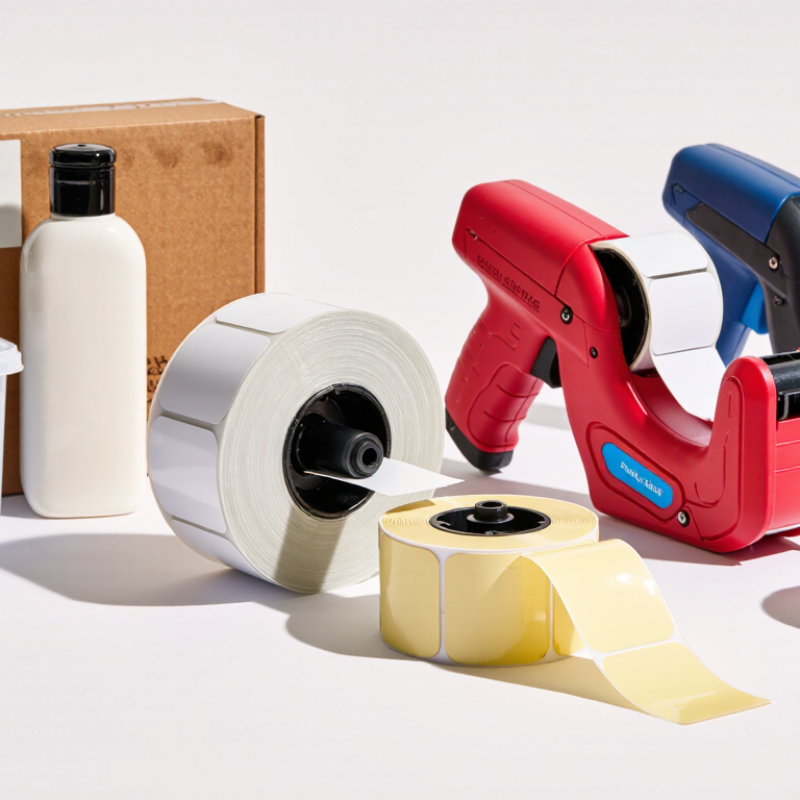
What Are Price Gun Label Rolls and How Do They Work?
Price gun label rolls are continuous strips of small, adhesive-backed labels. They fit inside a handheld pricing gun and feed through its printing mechanism. Each trigger pull advances one label, while an ink roller prints numbers, letters, or simple symbols. The label then separates from the backing paper through the gun’s peeling edge.
The roll must match the gun’s size, core, label spacing, and feeding direction. Measure the label width and height before ordering. Check the center core and outside roll diameter, too. A roll can look suitable but still jam when its gaps do not match the sensor or feed wheel. I once selected a roll by width alone. That assumption was wrong.
Adhesive choice depends on the surface and storage conditions. Smooth cardboard usually needs standard adhesive, while cold plastic or dusty packaging may require stronger adhesion. Test a few labels before buying in bulk. Watch for curled corners, faint printing, and uneven feeding. These details reveal poor compatibility quickly. Label material also affects performance. Paper is practical for dry indoor use, but coated stock can resist light moisture better. The best choice is not always the cheapest roll. It should feed cleanly, print sharply, and stay attached during normal handling.
Which Label Roll Sizes and Shapes Fit Your Price Gun?
Choosing a price gun label roll starts with the applicator channel, not the label artwork. Measure the label width, height, gap, core diameter, and roll diameter. Common retail sizes include 21 × 12 mm, 26 × 12 mm, and 26 × 16 mm. However, dimensions vary between models. A roll that looks close may jam after three turns.
One-line guns usually suit narrow rectangular labels for prices, dates, or short codes. Two-line guns need greater label height, often around 26 × 16 mm or larger. Round and oval labels can highlight discounts, but their release gap must match the gun’s sensor and feed path. Check the winding direction too. Labels wound incorrectly may print upside down or peel from the backing unevenly. I still measure twice.
Smithers’ The Future of Labels and Labeling to 2028 estimates global printed label demand at more than 70 billion square metres annually. That scale reflects the importance of accurate material selection, even for small retail rolls. Paper labels remain practical for dry indoor shelves, while synthetic stocks resist moisture and friction better. Adhesive strength also matters. A weak adhesive lifts on chilled packaging; an aggressive adhesive can leave residue. Before ordering a carton, test one roll with the actual gun, product surface, and storage conditions. Record the usable label size, core fit, and remaining waste after feeding. Mistakes happen here. The specification sheet is not always the whole story.
How Do Adhesive, Material, and Print Color Affect Label Choice?
2026 How to Choose Price Gun Label Rolls?
How Do Adhesive, Material, and Print Color Affect Label Choice?
Choosing price gun label rolls in 2026 starts with the surface they must survive. In my packing tests, adhesive mattered more than expected. Permanent adhesive holds well on cardboard, plastic tubs, and dusty shelves. Removable adhesive suits short promotions, but it can lift near freezer moisture. Press each label firmly for several seconds. That small step prevents curled edges. Still, no adhesive works perfectly on every surface.
Material changes how the roll feeds through the gun. Coated paper gives sharper numbers and a smoother release. Uncoated paper feels practical and costs less, but ink may look softer. For chilled storage, choose stock tested against condensation and handling. Thin rolls save space, yet they may tear during fast application. Thicker stock feels stronger, although some guns reject oversized rolls. Check the core size, roll width, and outer diameter before ordering. Measure twice.
Print color affects speed and readability at the shelf. Black usually creates the clearest contrast on white stock. Red or blue can highlight dates, sizes, or discount groups. However, pale colors disappear under weak store lighting. Test the actual color beside your product, not only on a screen. A dark label may look professional, but it can reduce contrast with black price marks. I once approved a bright sample that looked dull after heat exposure. That mistake changed my process: test adhesive, material, and color together.
How Can You Match Label Rolls to Your Products and Store Conditions?
2026 How to Choose Price Gun Label Rolls?
Match label rolls to both the pricing tool and the product surface. Check the roll width, label length, core size, and winding direction against your gun’s specifications. A roll that looks close may still feed poorly. Test one roll before ordering in bulk.
Then consider what the labels will face. Smooth glass, cardboard, and chilled plastic can require different adhesives. For refrigerated items, check that the adhesive is rated for cold surfaces and light condensation. In a busy shop, labels should resist smudging from frequent handling. Keep printed prices easy to read under your actual store lighting.
Think about storage, too. Heat, dust, and sunlight can affect label stock before it reaches the gun. Store spare rolls in a dry, shaded area, and keep them in their packaging. Small details matter. One practical check is to apply a label to a sample product, leave it overnight, then see whether its corners lift. This test is useful, though not perfect; real shelves and handling can be less predictable.
2026 How to Choose Price Gun Label Rolls?
How Can You Match Label Rolls to Your Products and Store Conditions?
Use this practical 1–5 planning scale to compare selection priorities, not as laboratory test data. Check your gun’s specified label dimensions and roll capacity first; then consider product surface, adhesive suitability, moisture, temperature, and handling. Test a sample roll on the actual product and in the store environment before ordering in bulk.
How Do You Check Roll Compatibility and Storage Requirements?
Before buying price gun label rolls, check compatibility with the actual applicator. Measure the roll width, outer diameter, and core diameter. Then confirm the winding direction. A roll may fit the spindle but still feed incorrectly. The label gap also matters. If the sensor cannot detect it, labels may advance unevenly. I once selected a roll with the correct width but the wrong core size. The machine jammed after several labels. That small mistake delayed a full packing task.
Adhesive performance needs equal attention. Smooth cartons, plastic containers, and dusty surfaces require different label strengths. Test a few labels before ordering bulk quantities. Check whether ink stays sharp after rubbing or brief moisture exposure. Thermal labels should match the printer or gun’s printing method. Some surfaces look clean but release adhesive later. I still recommend testing overnight. Quick checks can miss weak bonding.
Tips: Store rolls in their original packaging. Keep them away from sunlight, heat, and damp floors. A stable room temperature is safer. Do not stack heavy boxes on loose rolls. Let cold rolls reach room temperature before use. Rotate older stock first. Record roll size, adhesive type, and purchase date. Storage guidance is often overlooked, and that is where avoidable waste begins.
| 2026 How to Choose Price Gun Label Rolls? — How Do You Check Roll Compatibility and Storage Requirements? | |||
|---|---|---|---|
| Check | What to Verify | How to Check | Practical Guidance |
| Label dimensions | Label width, height, shape, and any gaps or notches between labels. | Measure one label and compare its shape and spacing with the machine’s specifications. | Dimensions must suit the label track and printing area. A roll that is too wide, narrow, or differently shaped may feed or print incorrectly. |
| Roll width and diameter | The full roll width and maximum outside diameter that the gun can hold. | Measure the roll across its width and from one outer edge to the other through its center. | Check the equipment manual or the label compartment. An oversized roll may not fit or may rub against the housing. |
| Core size | The inner diameter of the cardboard or plastic tube at the center of the roll. | Measure the inside opening and compare it with the gun’s spindle or holder. | The core must sit securely on the holder and rotate freely. Do not assume that rolls with the same label dimensions have the same core size. |
| Feed direction and winding | Which way the labels unwind and whether the label face is positioned correctly for the gun’s feed path. | Follow the loading diagram in the equipment manual and compare it with the roll’s unwind direction. | Incorrect winding can prevent labels from feeding properly or place the printable face in the wrong position. |
| Label material and print surface | Whether the stock is suitable for the gun’s printing method and intended use. | Confirm the required label stock in the equipment documentation; test a small quantity before purchasing in bulk. | Price guns commonly use impact printing. Use a surface and stock specified for the equipment, and check that the print is legible on a sample label. |
| Adhesive and application surface | Adhesive performance on the products or packaging to be labeled. | Apply a sample label to a clean, dry surface and check adhesion after the time needed for the intended handling conditions. | Surface texture, dust, moisture, temperature, and coatings can affect adhesion. Select stock for the actual surface and use conditions. |
| Storage temperature | The storage range specified for the particular label stock and adhesive. | Read the supplier’s product information or packaging instructions. | Store rolls in a stable indoor environment and avoid heat, freezing conditions, and rapid temperature changes. Follow the stock-specific limits rather than assuming one range fits all labels. |
| Humidity and moisture | Whether the storage area is dry and protected from condensation or water. | Inspect the storage area and packaging for dampness, condensation, or water damage. | Keep rolls dry and in their original packaging until needed. Moisture can affect paper, adhesive, and roll feeding. |
| Light, dust, and contamination | Exposure to direct sunlight, dust, oils, and other contaminants. | Check that rolls are sealed or covered and stored away from windows and dirty work areas. | Keep labels clean and protected. Contamination on the label face or adhesive can reduce print quality or bonding. |
| Stock age and rotation | Any stated shelf life, manufacturing date, or storage-life guidance for the adhesive and label material. | Check the packaging or product documentation and record receipt dates where appropriate. | Use older stock first when it remains within the stated storage guidance. Shelf life varies by material and adhesive, so use the supplier’s information. |
| Final fit test | Whether the roll loads, advances, and prints correctly in the specific gun. | Load one roll, advance several labels, and inspect alignment, feeding, and print clarity. | Confirm compatibility with the exact equipment model before ordering larger quantities. Stop if the roll binds or labels peel inside the mechanism. |
Article Source:
Request a Quote
Fill out the form below and one of our specialists will contact you to discuss your questions and needs.