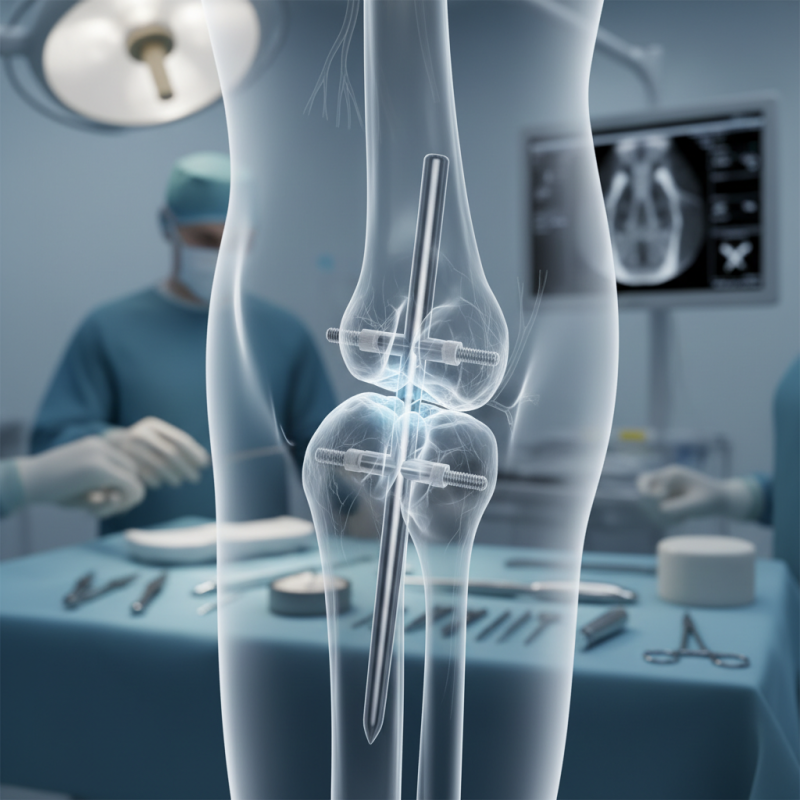
What is an Interlocking Nail Implant and How Does it Work?
An Interlocking nail implant is a crucial innovation in orthopedic surgery. This device provides stability to fractured bones, especially in long bones like the femur and tibia. Surgeons insert the implant into the medullary canal of the bone, where it interlocks and promotes healing.
The interlocking nail implant helps prevent complications such as malunion or nonunion of fractures. After surgery, patients often experience faster recovery. These implants come in various sizes to fit different patients. However, not all cases are ideal for this method. There can be challenges with alignment and infection.
While generally effective, the interlocking nail implant isn't without risk. Some patients may feel discomfort or have difficulty with mobility post-surgery. It’s important to monitor recovery closely. This technology continues to evolve, raising questions about future improvements and limitations in orthopedic care.
What is an Interlocking Nail Implant? An Overview of the Device
Interlocking nail implants are becoming a staple in orthopedic surgery. They provide a method for stabilizing fractured long bones. These devices consist of a nail that is inserted into the marrow cavity of the bone. The design allows for interlocking screws to be placed at both ends. This secures the bone fragments in correct alignment.
According to a recent orthopedic report, interlocking nails have shown an 85% success rate in repairing femoral fractures. These statistics garner attention from both surgeons and patients alike. However, complications can occur. Infections at the insertion site, for instance, have been reported in about 5% of cases. Some patients may experience delayed healing, prolonging recovery times.
Innovations in this field continue, but challenges remain. Not every patient is ideal for an interlocking nail implant. Surgeons must assess each case individually. Factors like bone quality and age play a crucial role. Continuous development in design and materials could improve outcomes. There's potential for further research to minimize complications and improve long-term success.
The Mechanism of Interlocking Nail Implants in Bone Stabilization
Interlocking nail implants are critical in orthopedic surgery. They provide stability to fractured bones, especially in long bones. The design allows the nail to interlock with the bone at several points, making it resistant to movement. This mechanism is vital for proper healing. The nail is inserted into the medullary cavity of the bone, ensuring it remains centered.
Once in place, screws pass through the nail and into the bone. This creates a solid construct. The interlocking feature prevents the fragments from shifting. However, not all fractures can benefit from this method. Surgeons must evaluate the fracture type and location carefully. Sometimes, the anatomy can complicate the process, leading to less optimal outcomes.
It's important to recognize that while effective, interlocking nails are not without challenges. Post-operative complications can arise, such as infection or improper alignment. Patients may need to undergo additional procedures if the healing process is not progressing well. Understanding the role of these implants helps in choosing the right treatment while also acknowledging their limitations.
What is an Interlocking Nail Implant and How Does it Work? - The Mechanism of Interlocking Nail Implants in Bone Stabilization
| Dimension | Description | Function | Material | Application Area |
| Length | Varies typically from 200mm to 400mm | Provides stability along the length of the bone | Titanium or stainless steel | Long bone fractures (e.g., femur, tibia) |
| Diameter | Commonly ranges from 8mm to 12mm | Facilitates fit within the medullary canal | Biocompatible alloys | Complex fractures and non-unions |
| Locking Mechanism | Interlocking screws used for fixation | Prevents axial migration of the nail | High-strength polymer or metal | Trauma and osteotomy procedures |
| Weight | Lightweight for ease of use | Reduces load on surrounding tissues | Metal alloys with low density | Pediatric and adult patients |
Clinical Applications of Interlocking Nails in Orthopedic Surgery
Interlocking nails are increasingly applied in orthopedic surgery, particularly for long bone fractures. According to a 2021 report from the Journal of Orthopedic Research, these implants provide stable fixation while allowing for early mobilization. This is crucial, as studies show patients can experience faster recovery times and lower complications. The interlocking design aids in axial and rotational stability, which is vital for healing.
In cases of complex fractures, interlocking nails are particularly beneficial. They are used in both diaphyseal and metaphyseal fractures. A study published in the Clinical Orthopaedics and Related Research indicated a 90% union rate in critical-sized defects treated with interlocking nails. However, limitations persist. Not every surgeon is well-versed in the specific techniques necessary for proper placement. A lack of experience can lead to complications, such as improper alignment.
Furthermore, while interlocking nails are versatile, they are not suitable for all patients. Some individuals may have contraindications, such as infections or poor bone quality. It is essential to weigh the benefits against the risks on a case-by-case basis. Unanswered questions remain regarding long-term outcomes and potential complications, underscoring the need for ongoing research in this field.
Interlocking Nails in Orthopedic Surgery
This chart illustrates the clinical applications of interlocking nails in orthopedic surgery over the years. The data reflects the number of procedures performed utilizing interlocking nails from 2018 to 2022.
Statistics on Success Rates and Complications of Interlocking Nails
Interlocking nail implants are widely used for treating bone fractures. Their effectiveness can often be measured through success rates and possible complications. Success rates for interlocking nails can reach up to 90%. However, these numbers are not always consistent across different demographics and types of fractures. Some studies report lower success rates in older patients or those with multiple health issues.
Complications are, unfortunately, part of the discussion. Infection rates occur in about 5% to 10% of cases. Additionally, some patients experience delayed healing or non-union of bone. It’s essential to monitor for these issues during recovery. While some may recover well, others face significant challenges.
Patient feedback often varies. Some report pain and discomfort linked to the implant. This can affect mobility and quality of life. Discussing these outcomes with a healthcare professional is crucial. Each individual’s journey is different, and understanding the risks can help set realistic expectations.
Future Innovations and Developments in Interlocking Nail Technology
Interlocking nail implants are important for stabilizing fractures in the long bones. However, technology continues to advance. Future innovations could lead to enhanced designs, making these implants even more effective. For example, newer materials may be less reactive. This could improve patient comfort and safety.
Think about biocompatible materials. They could integrate better with the body. This reduces the chances of infection. Research is ongoing, but results are promising. Yet, the process of developing these innovations can be slow. Change takes time and patience.
Moreover, 3D printing technology might play a role. Customizing implants for individual patients could become a reality. Personalized solutions often yield better outcomes. However, there's still a lot to consider. Not all patients respond the same way to treatments. Keeping a critical eye on developments will be essential. Some innovations may not work for everyone. A balance of excitement and caution is necessary.