How to Schedule Trash Pickup: A Complete Guide for Your Area
In today’s fast-paced urban environment, effective waste management is crucial, and scheduling trash pickup has become an essential aspect of maintaining a clean and sustainable community. According to a recent industry report by the Waste Management Association, approximately 25% of urban areas struggle with irregular trash collection, leading to increased litter and decreased public health. As cities grow, the demand for organized and timely trash pickup services will only intensify, making it imperative for residents to understand how to schedule these pickups properly.
Expert in waste management and sustainability, Dr. Linda Green, emphasizes the importance of efficient trash pickup systems, stating, "An organized trash pickup schedule not only enhances the cleanliness of neighborhoods but also plays a significant role in resource recovery and recycling efforts." By adopting best practices for scheduling, residents can contribute to a more sustainable waste management system, reducing environmental impact while ensuring their communities remain clean and inviting. This guide aims to provide a comprehensive overview of the necessary steps for effective trash pickup scheduling tailored to your area, ensuring your waste disposal practices align with both community standards and environmental goals.

Understanding Your Local Trash Pickup Schedule
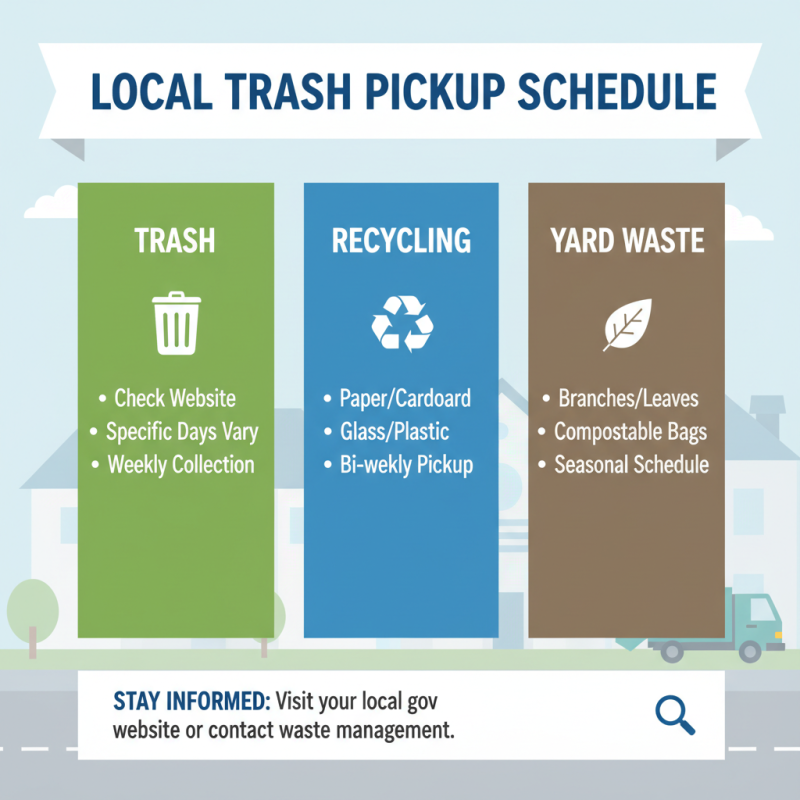
Understanding your local trash pickup schedule is essential for maintaining a clean and organized household. Each community has its own designated days for trash, recycling, and yard waste collection, which can vary widely. To stay informed about your schedule, start by checking your local government website or contacting your waste management service. They often provide calendars and guidelines that can help you stay on track.
Tips: Setting a reminder on your phone a day before pickup can help you remember to take out the bins. Additionally, consider labeling your bins with the appropriate collection days to avoid confusion, especially during holiday weeks when schedules may change.
Make sure to familiarize yourself with any special rules or regulations regarding the disposal of large items or hazardous materials in your area. Some communities offer bulk trash pickup days or specific drop-off locations for these types of waste. By being proactive and understanding your local trash pickup schedule, you can contribute to a more sustainable and efficient waste management system.
Identifying Different Types of Waste for Disposal
Proper waste management is essential for maintaining a clean and healthy environment. Knowing the different types of waste is crucial for effective disposal and recycling. According to the Environmental Protection Agency (EPA), waste can generally be categorized into several types: organic waste, recyclable materials, hazardous waste, and electronic waste. Organic waste, including food scraps and yard waste, accounts for approximately 30% of the total waste generated in the United States. Composting these materials can significantly reduce landfill waste while also providing nutrient-rich soil for gardening and landscaping.
Recyclable materials, such as plastics, paper, and metals, represent a substantial portion of municipal solid waste. The EPA reported that recycling and composting prevented the release of approximately 186 million metric tons of carbon dioxide equivalent into the air in 2018. However, it is essential to properly sort recyclables to ensure that they can be effectively processed, as contamination can lower the quality of recycled materials. Additionally, hazardous waste, which includes items like batteries, paints, and chemicals, poses environmental risks and should be disposed of correctly, often through specialized collection programs.
Finally, electronic waste (e-waste) is an emerging concern, with the United Nations estimating that global e-waste generation will reach 74 million metric tons by 2030. This waste contains valuable materials like gold, silver, and copper, but also poses severe environmental hazards if not handled properly. Communities must establish accessible e-waste recycling programs to mitigate these risks and recover valuable resources. By identifying and categorizing different types of waste, individuals and communities can contribute to more sustainable waste management practices and help protect the environment.
How to Contact Your Local Waste Management Authority
When it comes to scheduling trash pickup in your area, your first step should be to contact your local waste management authority. This organization is responsible for the collection and disposal of waste, ensuring that your community remains clean and sustainable. Typically, each municipality has its own waste management service phone number, which can be found on the official city or county website. For example, in a report by the Environmental Protection Agency (EPA), it is noted that over 85% of cities offer waste collection services that can be easily scheduled by phone or through online portals.
To effectively communicate with your local waste management authority, gather essential information such as your address, the type of waste you need to dispose of (e.g., regular household waste, recyclables, large items), and your preferred pickup times. According to the National Waste & Recycling Association, more than 70% of local authorities now offer online scheduling options, making it easier than ever to manage your waste disposal needs. By leveraging these available resources, you can ensure efficient trash pickup while adhering to local regulations and best practices in waste management.
Tips for Setting Reminders for Trash Pickup Days
Setting reminders for trash pickup days can help ensure that you never miss a collection, keeping your home clean and waste-free. One effective strategy is to use digital calendars or reminder apps on your smartphone. By setting a recurring reminder for the same day each week or month, you can automate the process and receive timely notifications. Make sure to choose a time that allows you to prepare your trash beforehand, perhaps the night before, so you're not rushing on the pickup day.
Another useful tip is to place visual reminders in areas where you spend a lot of time, such as on your refrigerator or near your front door. This could be a simple sticky note or a printed calendar that highlights trash pickup days. Additionally, consider establishing a routine around trash day, such as setting aside a specific day of the week for cleaning and organizing your waste. This consistency can reinforce the habit and help you stay on top of your tasks.
Lastly, if you live in an area with varying pickup schedules, consider subscribing to local community boards or social media groups where updates about trash collection can be shared. Being part of a community can not only keep you informed but also serve as a motivational reminder from neighbors who are also vigilant about their trash days.
Dealing with Missed Trash Pickups: What to Do Next
Dealing with missed trash pickups can be frustrating, but there are effective ways to handle the situation and ensure your waste is collected promptly. First, check the schedule set by your local waste management service. Sometimes, pickups may be delayed due to holidays, inclement weather, or community events. Understanding the scheduled pickup days can prevent any confusion in the future.
If your trash hasn't been collected, the first step is to contact your waste management provider. Most companies have a customer service line or online portal where you can report missed pickups. Provide them with your address and details about the missed collection. Many services will address the issue quickly, ensuring that your trash is picked up as soon as possible.
Tips: Always place your trash bins out the night before the scheduled pickup to avoid missing your collection time. Additionally, make sure your bins are easily accessible and not obstructed by vehicles or other items. If you consistently experience missed collections, consider discussing a more reliable schedule with your provider or seeking alternatives in your area.