Top 10 Swarm Drones You Need to Know About?
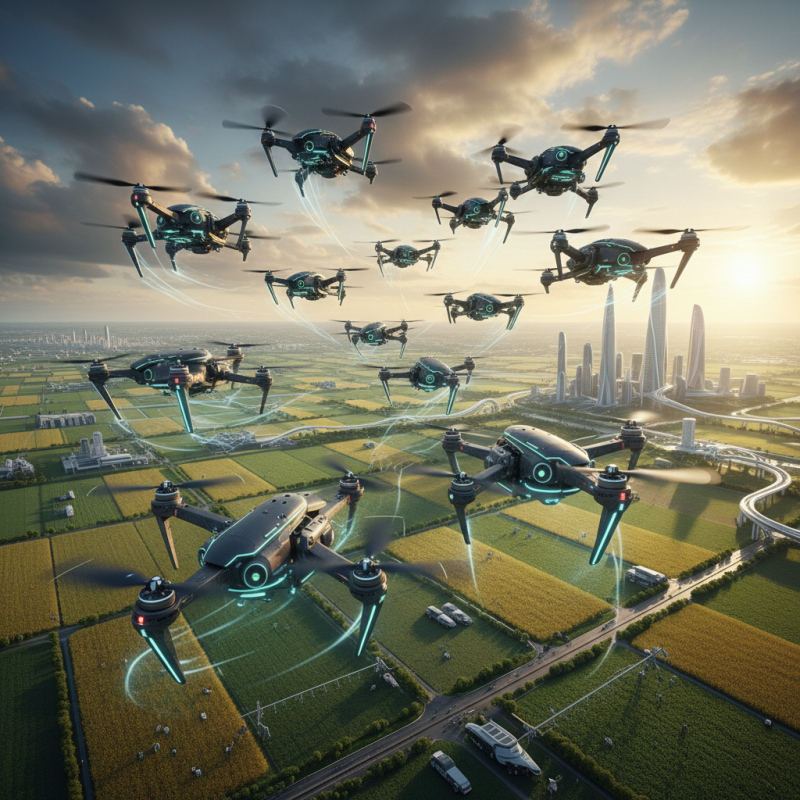
Swarm Drones represent a revolutionary leap in drone technology. These intelligent, coordinated flying machines can work together to achieve complex tasks. Their potential applications span from military operations to agricultural monitoring.
The beauty of swarm drones lies in their collective behavior. When deployed in groups, they can communicate and make decisions in real-time. This capability raises both excitement and ethical considerations. For instance, how do we ensure their use is safe and responsible? There are challenges to tackle regarding privacy and security.
As we delve into the top 10 swarm drones, it’s important to reflect on their implications. Some designs are innovative, yet they also prompt questions. Are we ready for a future where these drones are commonplace? How will they shape industries and our daily lives? Swarm drones are not just tools; they are harbingers of change.
Overview of Swarm Drones: Definition and Key Features
Swarm drones represent a fascinating advancement in drone technology. These drones operate collectively, sharing information and coordinating their actions. This approach mimics natural swarming behaviors observed in animals, like birds or fish. Each drone acts autonomously yet harmonizes with others, making them an efficient tool for various applications.
Key features of swarm drones include scalability and flexibility. As the mission increases in complexity, you can quickly deploy more units. The ability to adapt to changing environments is impressive. However, this technology also raises concerns. There’s a risk of reliance on automated systems leading to decision-making oversights. If one drone malfunctions, the entire swarm might be affected.
Swarm drones are equipped with sensors and communication tools. They can collect data simultaneously, enhancing the speed of information gathering. This collective advantage is notable but requires robust programming. Mistakes can happen in swarm coordination, potentially causing accidents. Continuous refinement and testing are essential for improvement.
Applications of Swarm Drones in Military and Civilian Sectors
Swarm drones have emerged as significant tools in both military and civilian sectors. In military applications, they provide enhanced surveillance capabilities. A group of drones can cover larger areas more efficiently than a single unit. This allows for real-time intelligence gathering, crucial in combat scenarios. However, coordinating multiple drones can present complex challenges. Communication failures or misalignment can hinder operations.
In civilian applications, swarm drones show promise in agriculture, disaster response, and infrastructure inspection. For instance, they can monitor crop health across vast fields. A swarm can quickly identify areas needing attention. Yet, integrating these drones into existing workflows is not always seamless. Technical glitches and battery life can impact their effectiveness. Moreover, public acceptance of drone technology varies. This may slow down implementation in some regions.
Top 10 Innovative Swarm Drones: Highlights and Specifications
Swarm drones are revolutionizing various industries. They work together, mimicking the behavior of a flock of birds. This technology has applications in agriculture, search and rescue, and surveillance. Each drone contributes to a collective mission. They can communicate in real-time, sharing vital data and improving efficiency.
One impressive highlight is their ability to perform complex formations. They adapt swiftly to changing scenarios. This flexibility allows for innovative uses, like monitoring wildlife or assessing disaster zones. However, there are challenges to address. Operating multiple drones can lead to communication issues. Coordination sometimes falters, posing risks in crucial situations. Testing and refining these systems is essential.
The specifications of swarm drones often include advanced sensors and autonomous capabilities. They can fly longer distances while carrying various payloads. Some models feature obstacle avoidance technology. Despite these advancements, limitations still exist. Battery life may restrict flight time, necessitating further developments. Understanding these aspects is key to maximizing their potential.
Top 10 Innovative Swarm Drones: Highlights and Specifications
Comparative Analysis: Performance Metrics of Leading Swarm Drones
Swarm drones are becoming increasingly popular in various fields. Their unique capabilities allow for coordinated tasks and complex operations. When analyzing their performance metrics, several key factors come into play. These include range, speed, payload capacity, and autonomy. Each of these factors affects how a swarm functions as a unit.
For instance, range often determines how far drones can operate effectively. Some swarm drones have impressive ranges, but environmental conditions can severely impact performance. Speed varies widely among models. This affects how quickly missions can be completed, but it can also compromise stability. Additionally, payload capacity is fundamental for specific applications. Some drones are designed to carry sensors, while others may carry small packages. Autonomy plays a crucial role in the effectiveness of swarms. How they navigate and make real-time decisions can make or break a mission.
Performance metrics are not without challenges. Many drones struggle in crowded environments or face communication issues. The need for reliable algorithms can also hinder operations. Swarm behavior must be thoroughly tested in real-world conditions. Each failure offers lessons that can drive innovation forward. Understanding these performance metrics is vital for anyone interested in the future of swarm technology.
Future Trends and Developments in Swarm Drone Technology
Swarm drone technology is quickly advancing. These drones work together to complete tasks efficiently. They can cover large areas and gather data. The future holds exciting possibilities for these flying robots.
One trend is improved communication among drones. They will be able to share data in real time. This leads to faster decision-making. Think about search and rescue operations. A swarm can cover vast terrain quicker than individuals. However, synchronization remains a challenge. Drones may still collide or lose track of each other.
Another development is AI integration. Drones could learn from experiences. They might adapt to new environments or adjust flight paths. This adaptability can boost effectiveness. Yet, AI introduces risks. Will drones make independent decisions? This raises ethical questions around responsibility.
Tips for leveraging swarm technology:
- Ensure clear communication protocols are in place. This helps avoid confusion during operations.
- Regularly test drones in controlled environments. This allows for identifying potential failures early.
- Consider the legal and ethical implications. Understand how swarm technology impacts society as a whole.